
Yan' Dargent at St Servais and elsewhere
Sur les pas de Yan’ Dargent is an invitation to let yourself be guided by Yan’ Dargent, to engage in a dialogue between Breton landscapes and his paintings, to visit the churches where the artist has chosen to exhibit, and to find him in museums and other places open to the public. Initiated by the Association des Amis du Musée Yan’ Dargent, this itinerary was proposed on the occasion of the bicentenary of the artist’s birth. The first edition focused on his native Finistère.
Go to the detailed description of the route In the footsteps of Yan’ Dargent:
Saint-Servais, Quimper, Landerneau, Morlaix, Saint-Pol-de-Léon, Brest, Loctudy, Plouvien and Plounéventer
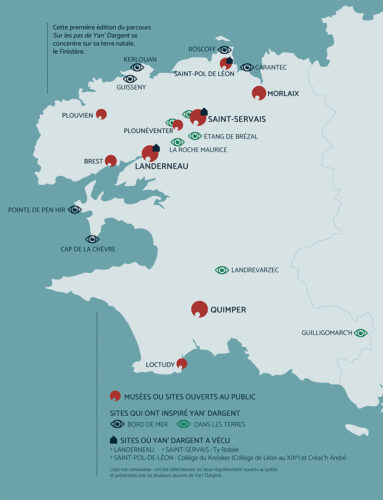
Saint-Servais
Today, the museum and parish enclosure complex is the place that best reveals the artist’s dimension.
The Yan’ Dargent museum exhibits a wide range of painted works and a large collection of drawings and illustrated books by Yan’ Dargent.
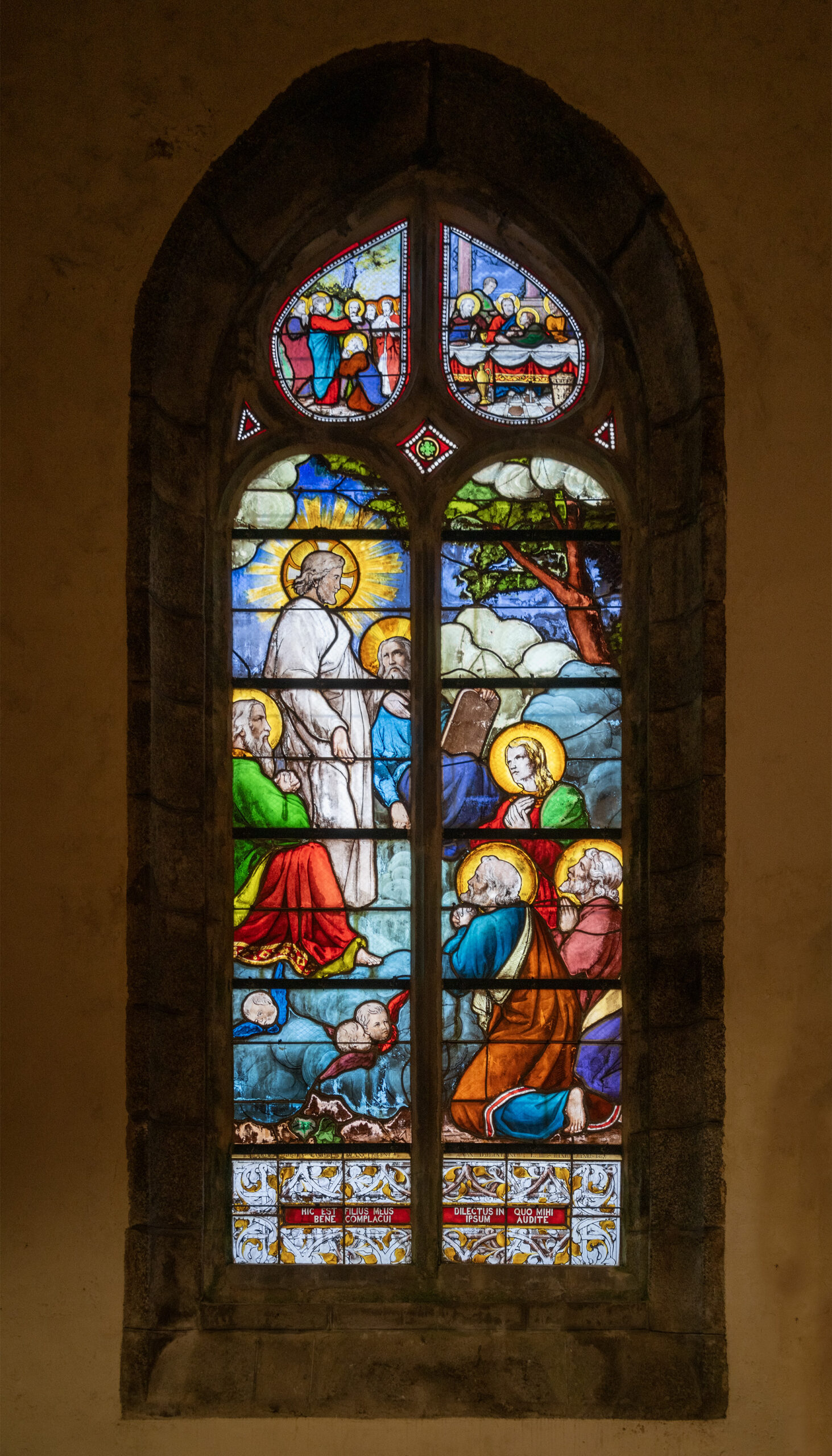
A visit to the museum is complemented by a tour of the 17th-century church and ossuary. Here you can discover many of the artist’s works: murals, paintings and stained glass. Some of these works were installed by the artist himself, while others were more recently acquired. All have been restored as part of a major project to upgrade the parish enclosure carried out by the municipality with the support of various bodies (DRAC, Fondation Patrimoine, Région Bretagne, Conseil Départemental du Finistère).
The commune is an ideal starting point for a hike. The Yan’ Dargent hiking trail passes by Ti Robée, Yan’ Dargent’s birthplace, now in ruins. You can also visit the banks of the Elorn and Brézal, places that often inspired Yan’ Dargent.
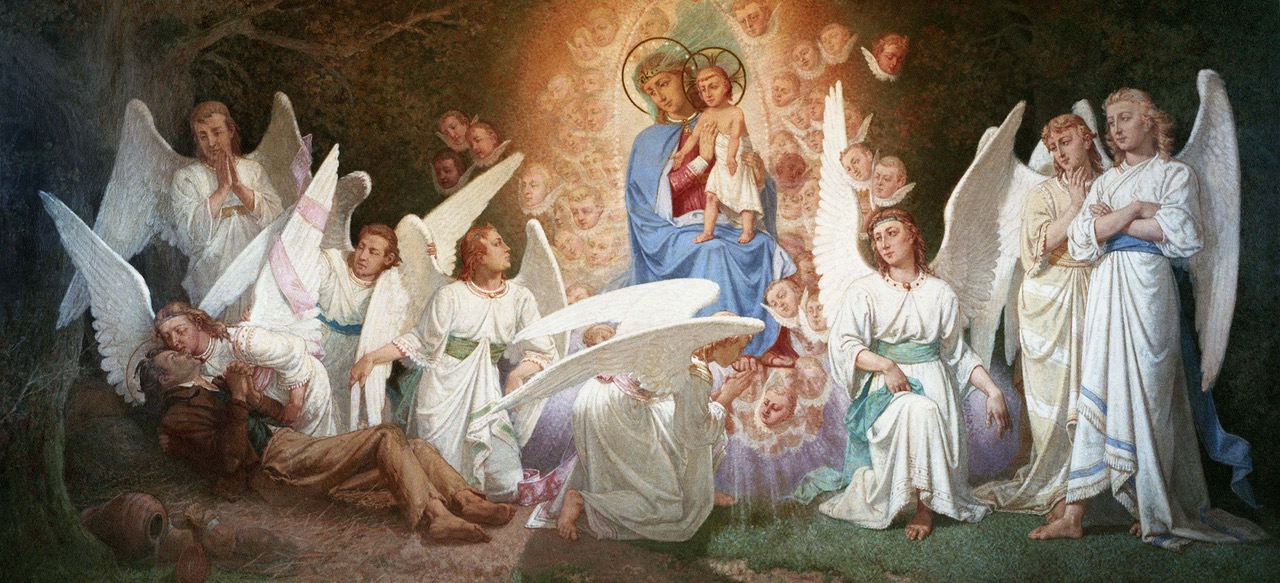
The Death of Salaün ar Foll
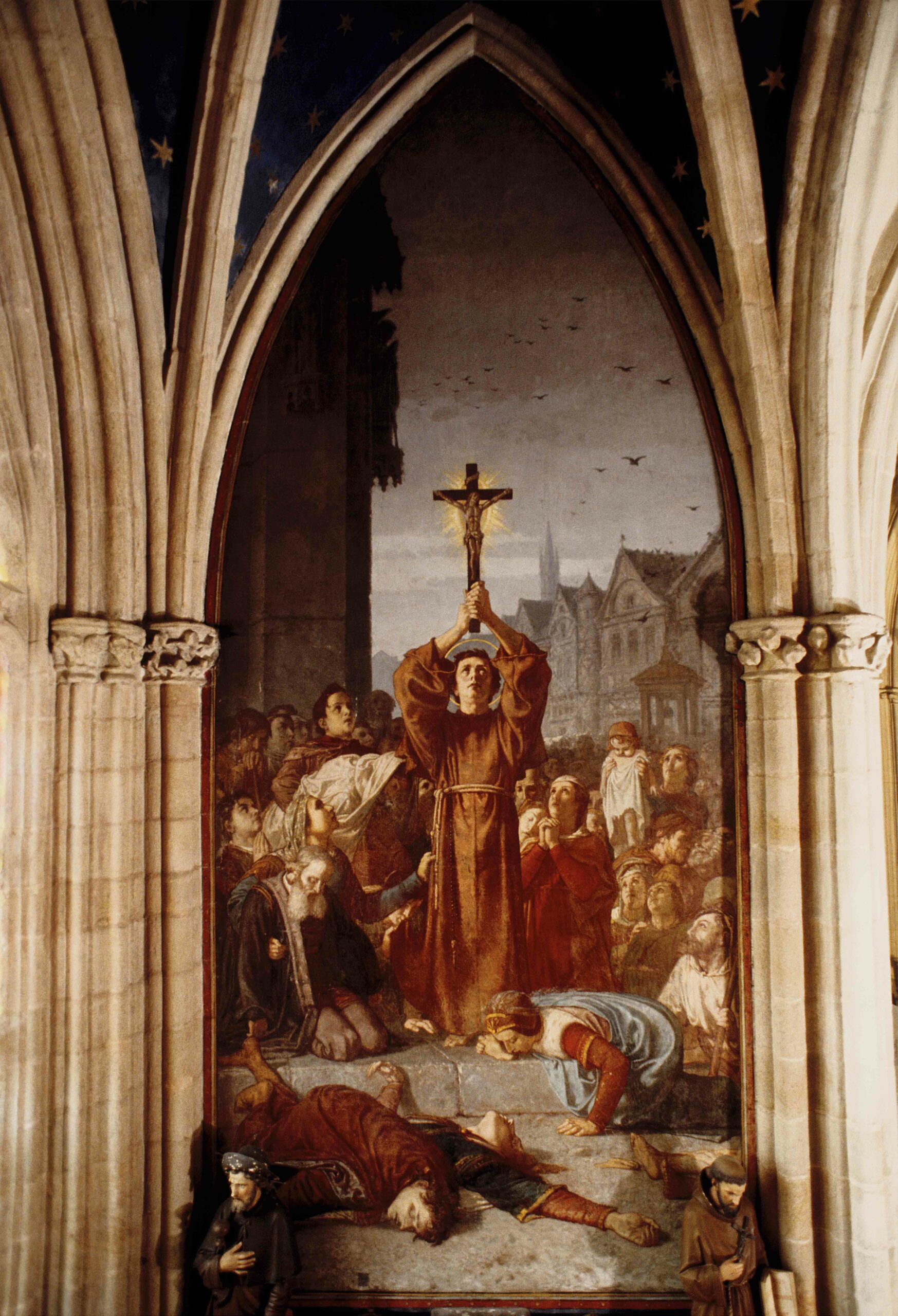
Quimper
Saint-Corentin Cathedral. In 1870, Mgr Sergent, bishop of the Quimper diocese, commissioned Yan’ Dargent to decorate the cathedral’s eight side chapels. This was the artist’s most important decorative program to date. In 1871-1872, he decorated the chapels of Saint Peter, Saint Roch and Saint Corentin, followed by the chapels of Saint Anne and Saint Joseph in 1873, Saint John the Baptist in 1875, and Saint Paul and Saint Frederic in 1876. As part of a second program, the artist created Le Père Maunoir recevant le don de la langue bretonne and Le Prêche de dom Michel le Nobletz in 1878-1879, and the Nativity andAdoration of the Magi in 1881-1883.
In keeping with tradition, Yan’ Dargent has paid tribute to the sponsors and donors by painting their faces in these works: Mgr Sergent, the canons of Calan, de Penfeuntenyo and Rossi, helpers and friends such as Victor Courant, the Cornics of Kernazet en Kerfeunten.
Most likely in recognition of this work, in 1877 the artist was awarded the Légion d’Honneur.
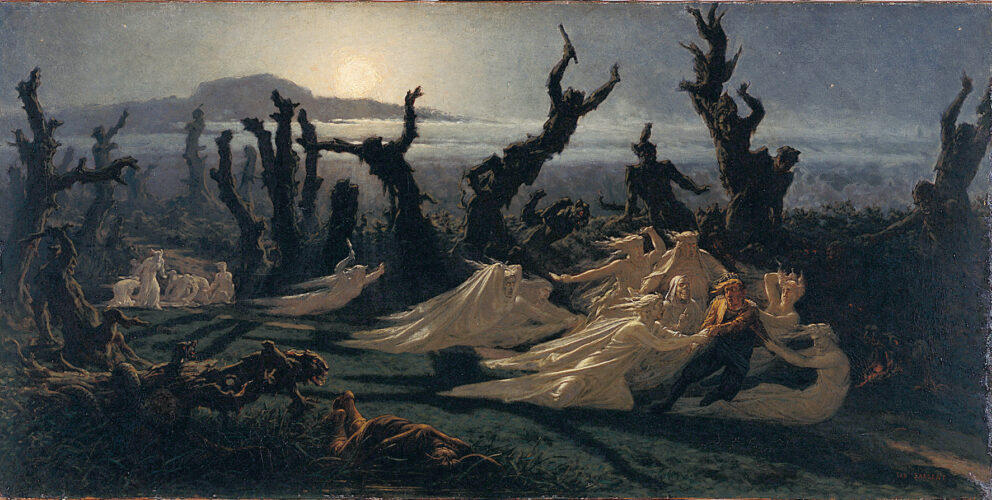
The washerwomen of the night
The Musée des Beaux-Arts in Quimper is one of the richest in works by Yan’ Dargent.
The Symbolist room in the museum displays the unforgettable Lavandières de la nuit (an 1888 replica of the 1861 painting), L’ancien Calvaire de Killinen near Quimper and L’Escadre du Nord à l’horizon de Goulven. The museum also has a very important collection of drawings and studies by Yan’ Dargent: La mort du dernier barde (charcoal, 1864), Portrait de Prosper Proux, L’Ombre du marais, Les Grottes de Toulinguet, Paysage à la charrette.
Please note: the museum will be closed for renovation in October 2024.
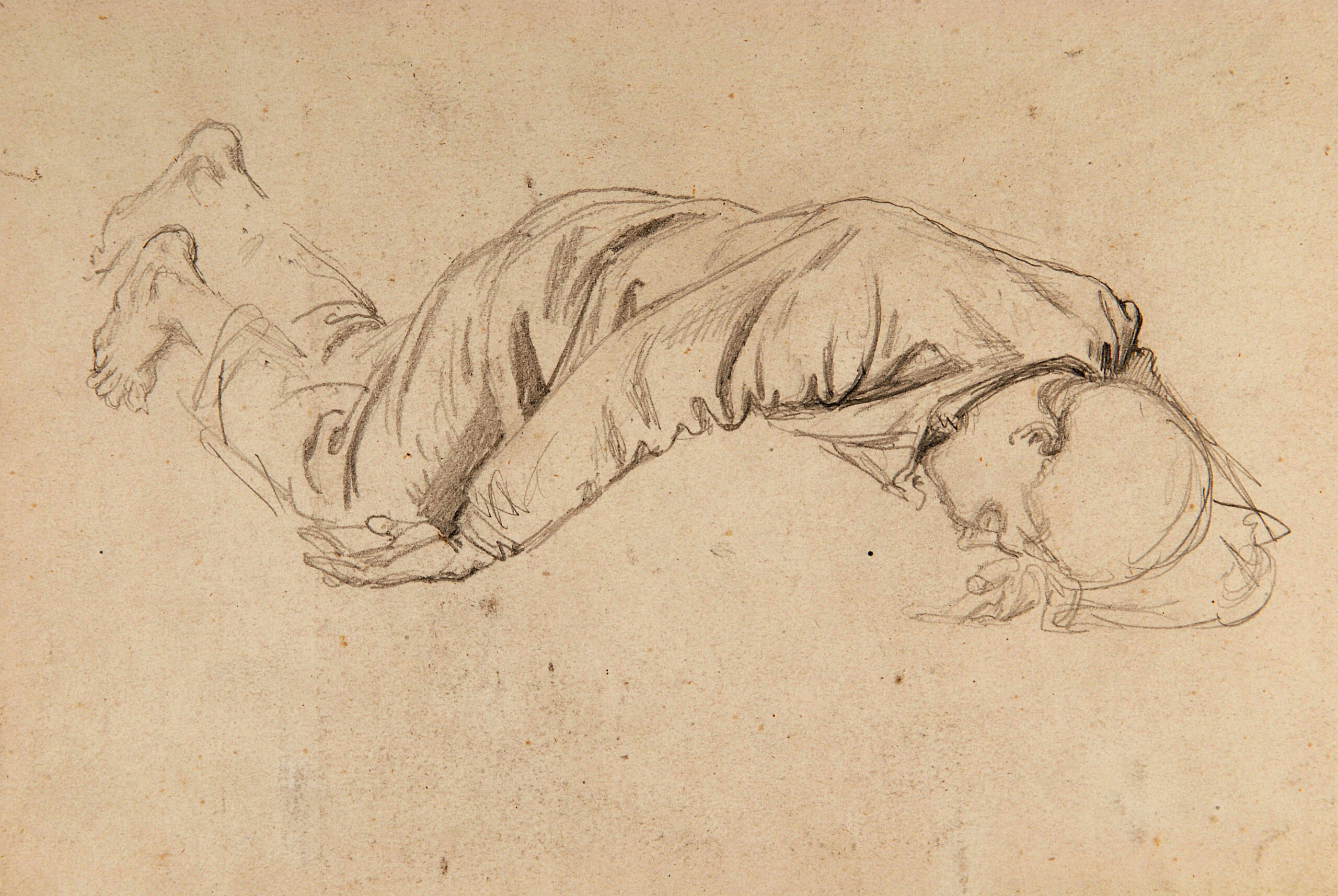
Study for Les Lavandières de la nuit
The Musée départemental breton boasts an extensive collection of drawings and preparatory studies (pencil, ink), oil paintings and ceramics.
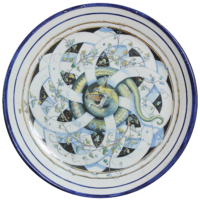
Landerneau
Claude Dargent, Yan’ Dargent’s father, had founded a new home there after the death of Yan’ Dargent’s mother in 1826. The artist maintained contact with his half-siblings.
The church of Saint-Houardon is home to 13 works by the artist, hung in the choir and nave and classified as Historic Monuments. An exhibition sheds light on Yan’ Dargent’s links with Landerneau, and in particular the eventful history of these paintings.
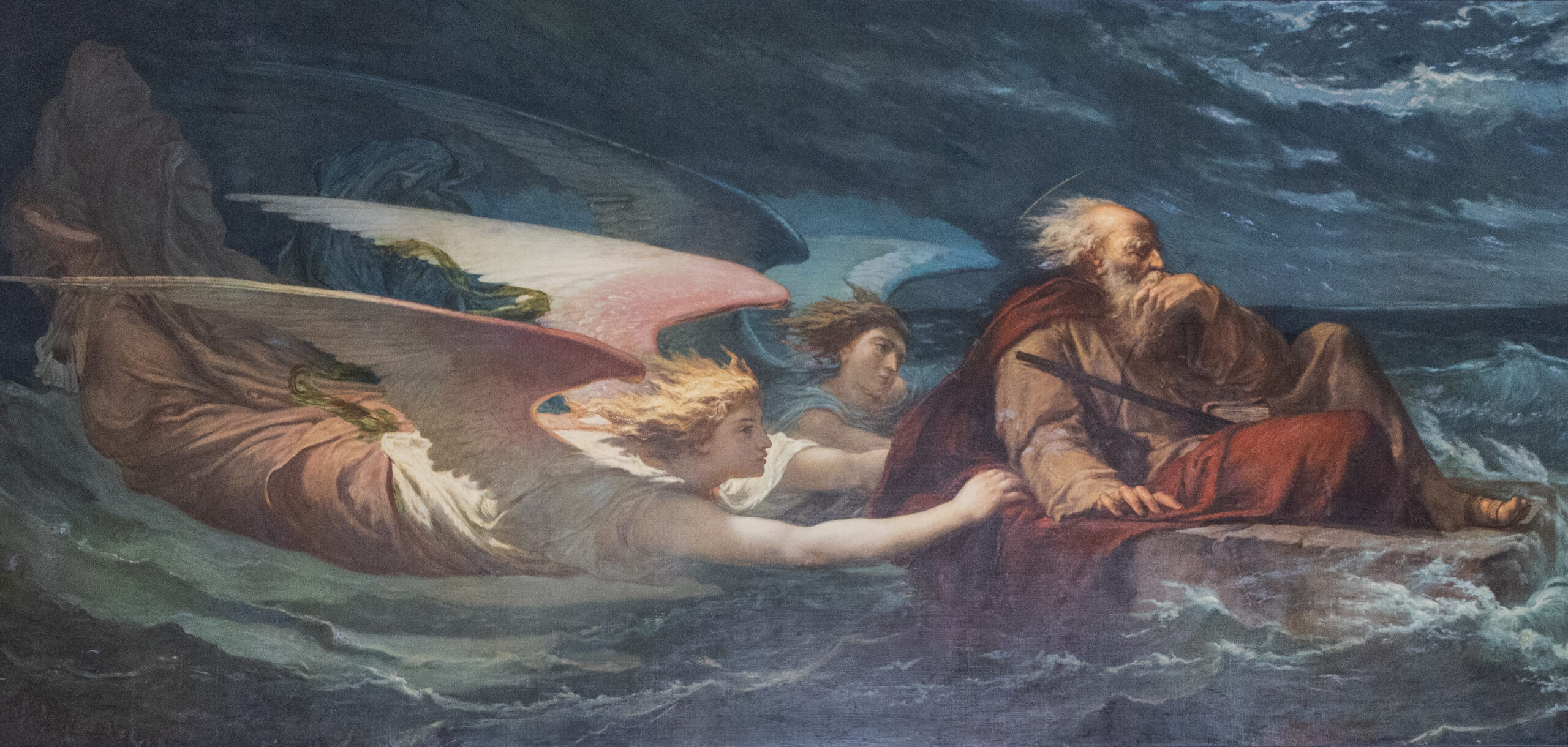
A miracle from Saint-Houardon
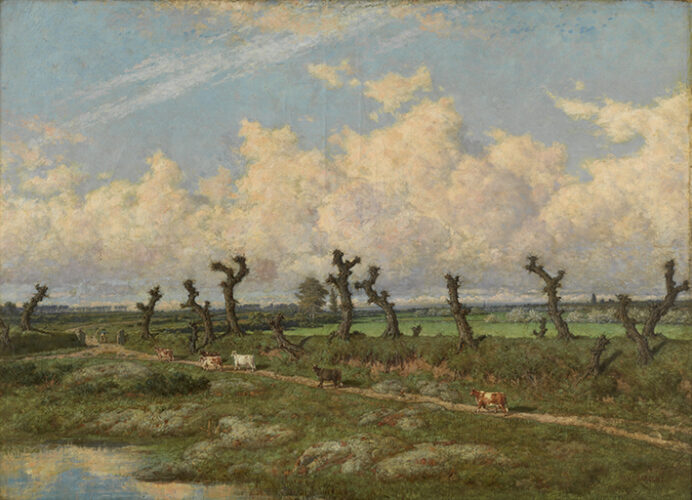
Saint-Pol-de-Léon
Yan’ Dargent was a pupil at the Collège de Léon from 1837 to 1839 (which became the Collège du Kreisker in 1911), and he remembers it well. He produced two paintings for the establishment: Le Petit Poucet and Enfants jouant sur une falaise. These two paintings will be on display at the Yan’ Dargent Museum during the summer of 2024.
He settled there, building a villa on the coast between Saint-Pol-de-Léon and Roscoff. He moved to Créac’h André in 1865. The surrounding seaside inspired him greatly. You can also go further afield, to Carantec, Kerlouan or Guissény, to discover other places painted by the artist (see the paintings Bord de mer à Carantec and Pilleurs de mer à Guissény in the Yan’ Dargent museum).
The Saint-Pol-de-Léon town hall exhibits the painting La Fillette léonarde, also known as La petite roscovite or La coureuse des grèves. The painting and its frame have been listed as a historical monument since 2014. The painting is on display at the Town Hall during opening hours.
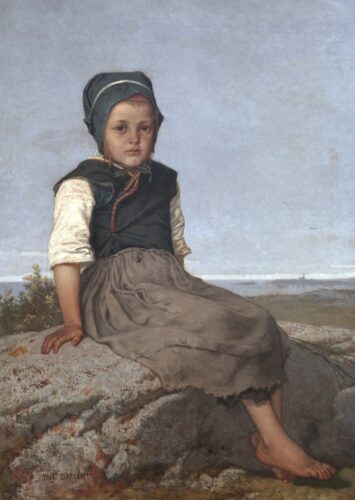
La fillette léonarde
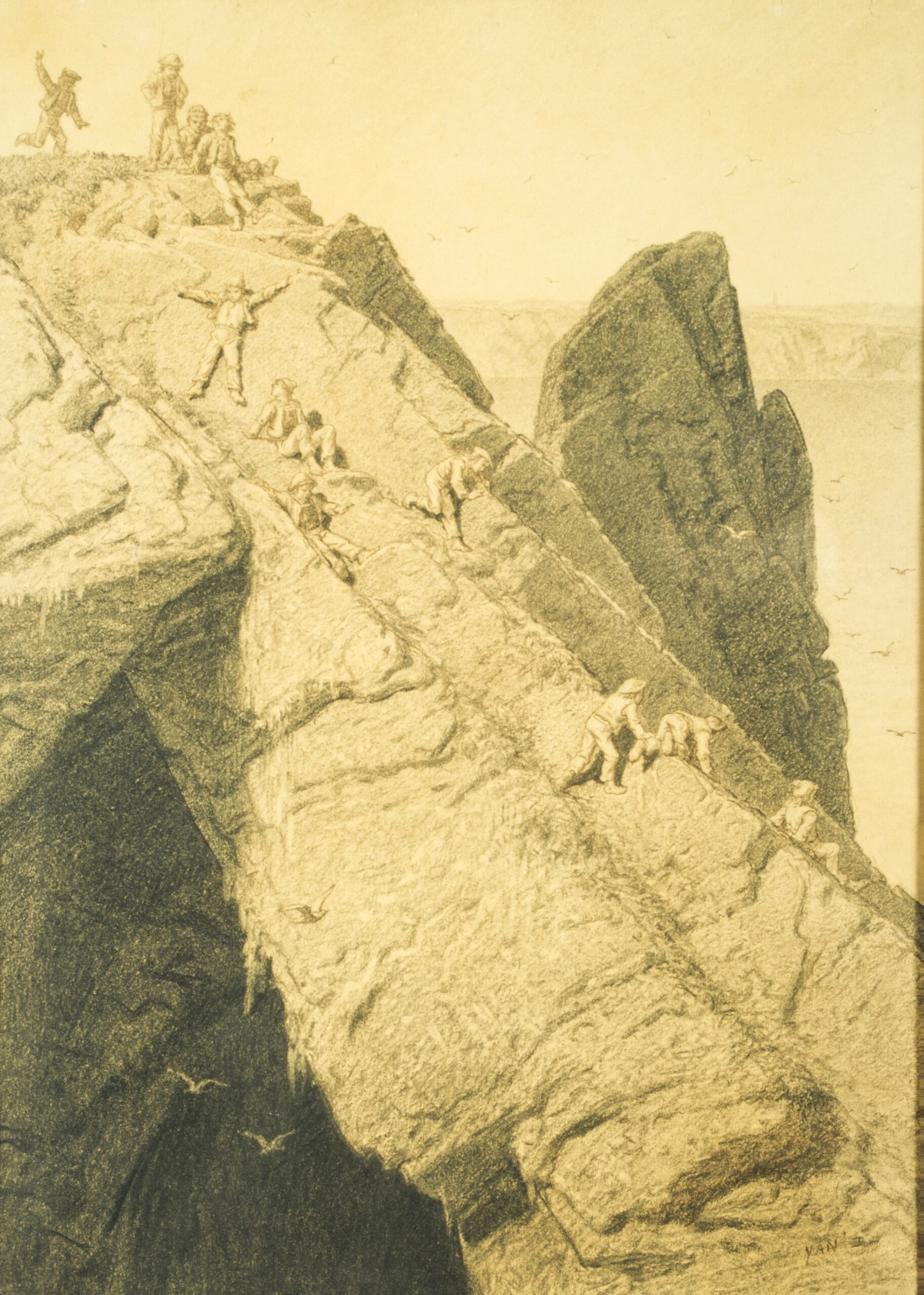
Loctudy
At the Manoir de Kerazan, owned by the Institut de France, the Grand Salon features a small oil-on-wood marine by Yan’ Dargent, close to the fine painting in the Musée des Beaux-Arts de Brest. Le Soir aux grèves de Roscoff.
Les Grèves de Roscoff, a seascape painted around 1865-1870, is thought to be a preparatory study for a larger, as yet unknown project. Yan’ Dargent is keen to showcase Breton landscapes, an ambition shared by the owners of the Kerazan manor house, the Astor family. The painting was restored in 2011.
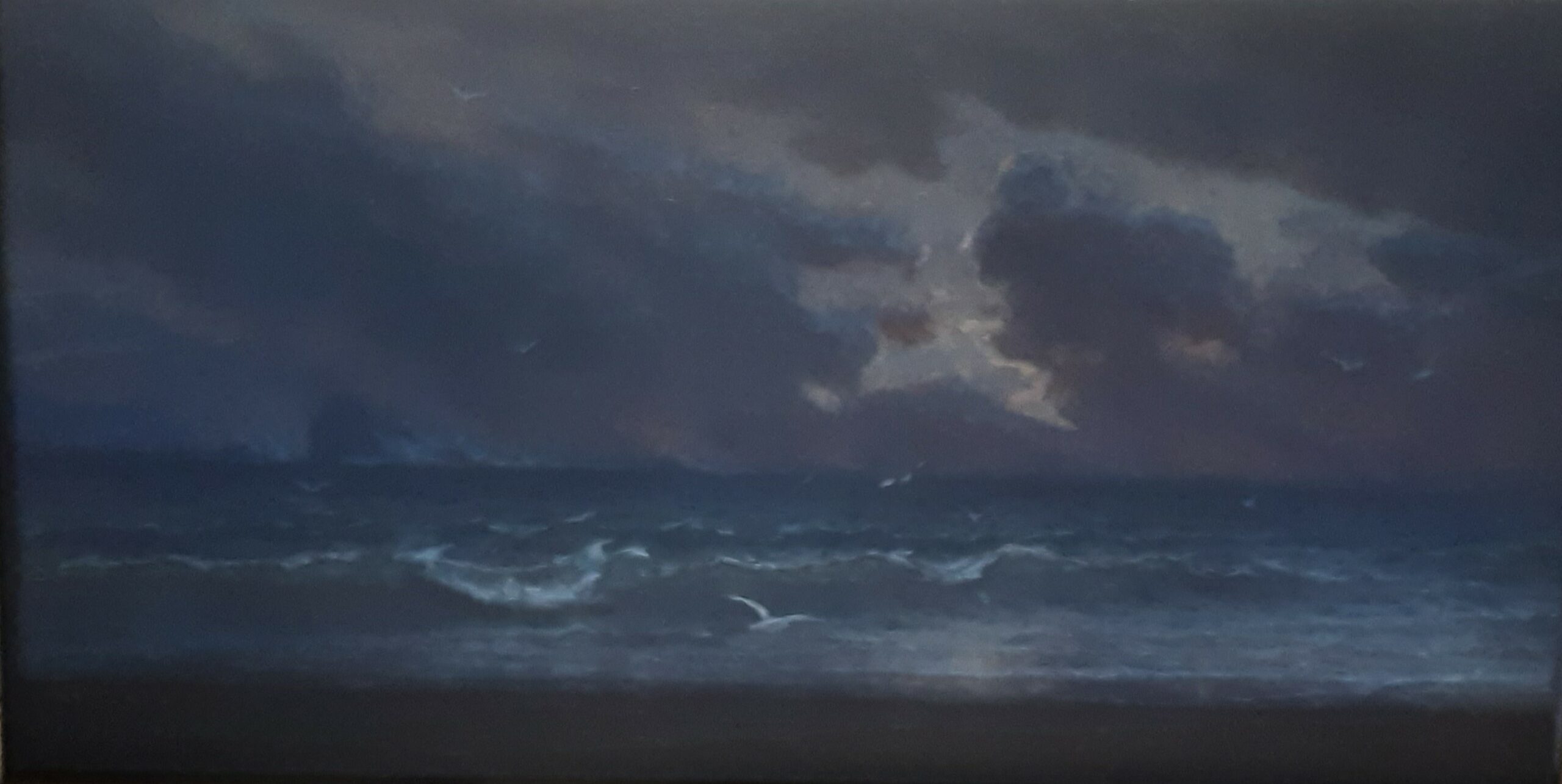
Les Grèves de Roscoff
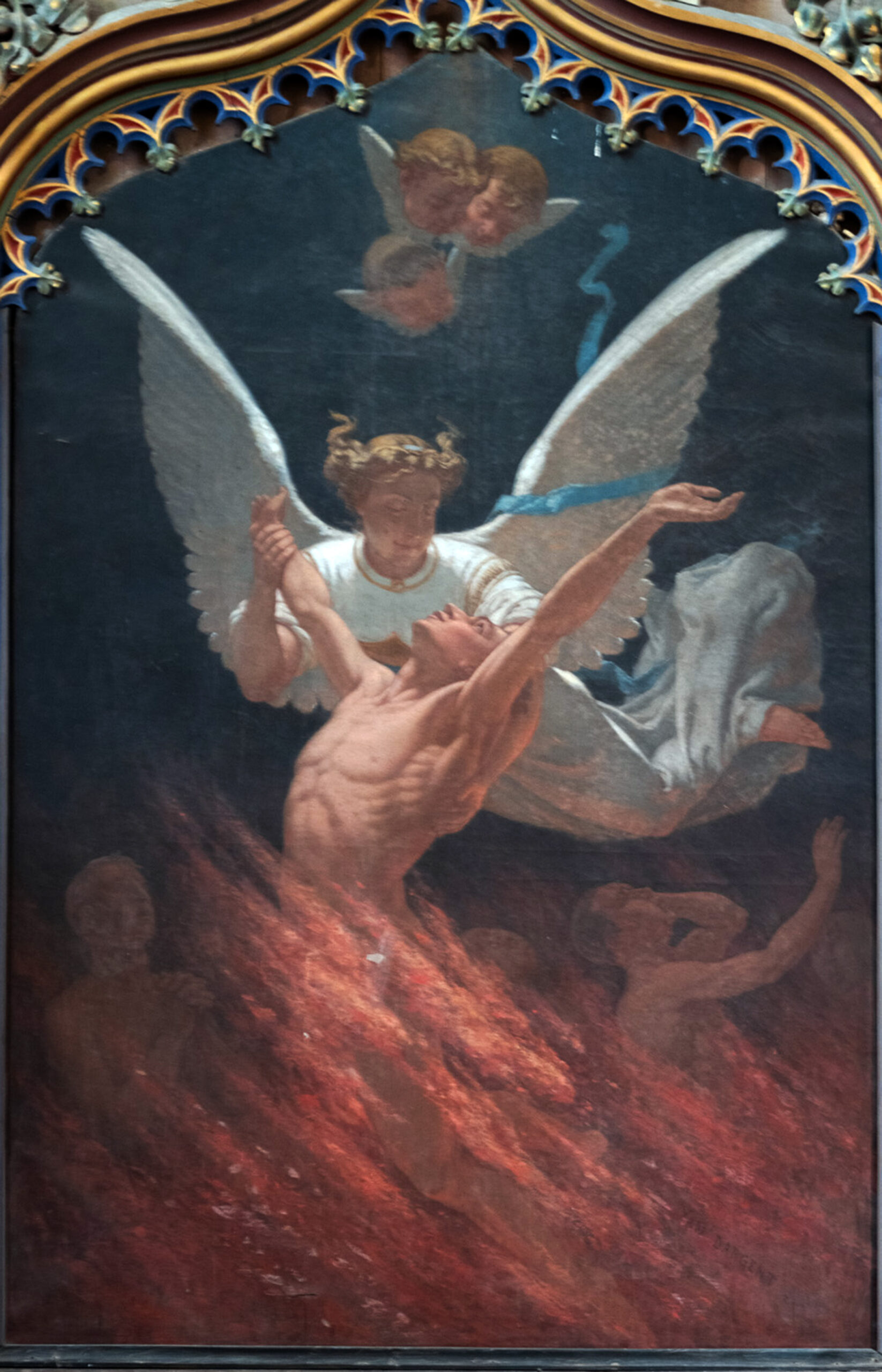
The In the footsteps of Yan’ Dargent trail was created on the initiative of the Friends of the Yan’ Dargent Museum and with the support of :